Greek Mythology and Delphi: Gods, Heroes, and Sacred Stories
No place in Greece is more deeply intertwined with mythology than Delphi. Before it was an archaeological site or a UNESCO monument, it was the most sacred place in the ancient Greek world, the spot where heaven and earth met. The myths surrounding Delphi explain how a remote mountain sanctuary became the spiritual centre of an entire civilisation, and understanding these stories transforms a visit from sightseeing into something genuinely profound.
For the historical context of the Oracle, read our dedicated article on the Oracle of Delphi. For practical visit planning, see things to do in Delphi.
Apollo and the Python
The founding myth of Delphi tells how the young god Apollo, only four days old, journeyed from the island of Delos to claim a sanctuary of his own. He found the site guarded by Python, a monstrous serpent born from the mud left by the great flood of Deucalion. Python had been terrorising the local inhabitants and protecting an older oracle dedicated to the earth goddess Gaia.
Apollo slew the Python with arrows forged by Hephaestus, claiming the site for himself. The name Delphi may derive from delphis (dolphin), referring to another myth in which Apollo took the form of a dolphin to guide Cretan sailors to become his first priests. The Pythian Games, held every four years, commemorated Apollo’s victory over the serpent, and the priestess who delivered the Oracle’s pronouncements was called the Pythia in honour of the slain beast.
The Omphalos: Centre of the World
According to myth, Zeus released two eagles from opposite ends of the world and they met at Delphi, marking it as the omphalos (navel) of the earth. A sacred stone representing this cosmic centre was kept in the Temple of Apollo. You can see a Roman-period copy in the archaeological museum, carved with a net pattern that may represent the threads of fate.
The concept of Delphi as the world’s centre was not merely symbolic. For the ancient Greeks, it was literally true. All distances were measured from the omphalos, and the site’s spiritual authority derived from this position at the axis of the cosmos.
Dionysus at Delphi
While Apollo is the god most associated with Delphi, his half-brother Dionysus played an equally important role. According to tradition, during the three winter months when Apollo was absent (residing among the Hyperboreans in the far north), Dionysus ruled the sanctuary. His followers, the Thyiades, performed ecstatic rites on the peaks above Delphi by torchlight.
This dual worship reflects a deep understanding of human nature: Apollo represented reason, order, and clarity, while Dionysus embodied ecstasy, transformation, and the irrational. Delphi held both in balance, acknowledging that wisdom requires both light and shadow. The pediments of the Temple of Apollo depicted Apollo on one side and Dionysus on the other.
The Oracle and the Pythia
The Oracle of Delphi operated for over a thousand years, from approximately the 8th century BC to the 4th century AD. The Pythia, always a local woman, would sit on a tripod over a chasm in the earth, inhale vapours (modern geology has identified ethylene gas from fault lines beneath the temple), and enter a trance state in which she uttered the god’s responses.
Pilgrims came from across the Mediterranean to consult the Oracle on matters of war, colonisation, law, and personal fate. The responses were famously ambiguous: when King Croesus of Lydia asked whether he should attack Persia, the Oracle replied that if he crossed the river Halys, a great empire would fall. It did: his own. Our Oracle of Delphi article covers this history in full detail.
Heroes and the Pythian Games
The Pythian Games, second in prestige only to the Olympics, drew athletes, musicians, and poets from across the Greek world every four years. Unlike the Olympics, which focused on athletic competition, the Pythian Games included musical and dramatic contests, reflecting Apollo’s association with the arts. Winners received a laurel wreath cut from the sacred tree in the Vale of Tempe.
The stadium where foot races were held and the theatre where musical contests took place are both still visible at the site. Walking in these spaces, you stand where audiences of thousands gathered to celebrate human achievement under the gaze of the gods.
Other Myths Connected to Delphi
Heracles and the Tripod: The hero Heracles, denied an oracle consultation, attempted to steal the sacred tripod. Apollo intervened, and Zeus had to separate his two sons with a thunderbolt.
Orestes and the Furies: After killing his mother Clytemnestra to avenge his father Agamemnon, Orestes came to Delphi seeking purification. Apollo protected him from the vengeful Furies, setting the stage for the trial in Athens that established the principle of justice over revenge.
The Flood of Deucalion: When Zeus sent a great flood to destroy humanity, Deucalion and his wife Pyrrha survived by building an ark. They landed on Mount Parnassos above Delphi and repopulated the earth by throwing stones over their shoulders, which transformed into people. This myth connects Delphi to the very origins of humanity.
Experience the Myths at Delphi
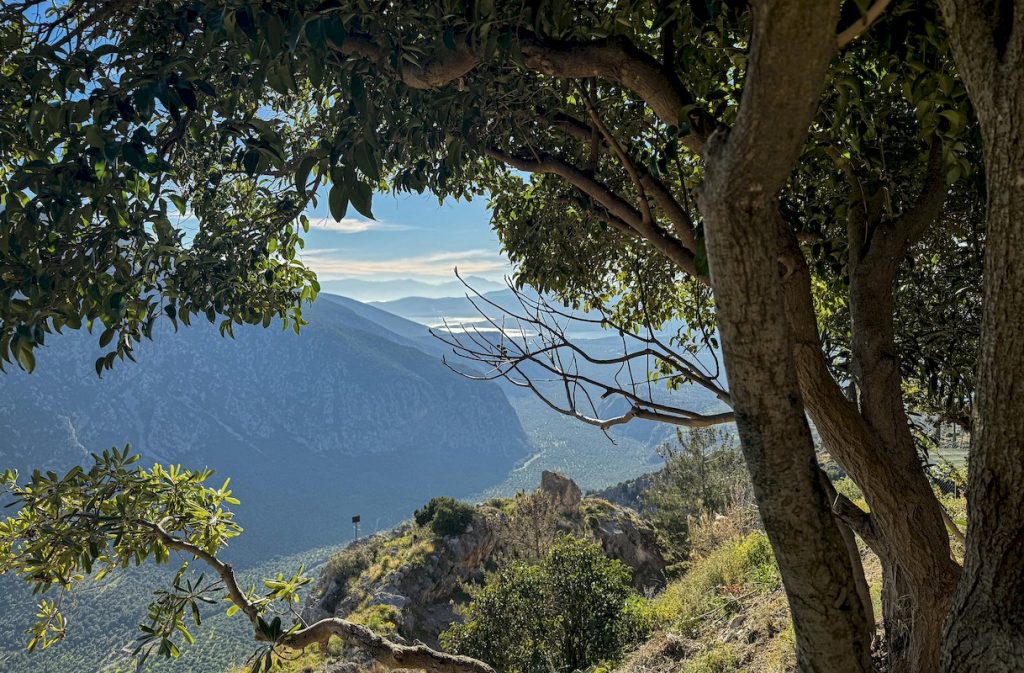
Walking through Delphi with these myths in mind transforms every stone and every view into part of a living narrative. The site is not just ruins; it is a landscape where gods fought serpents, where Zeus marked the centre of the world, and where mortals sought divine wisdom for over a millennium.
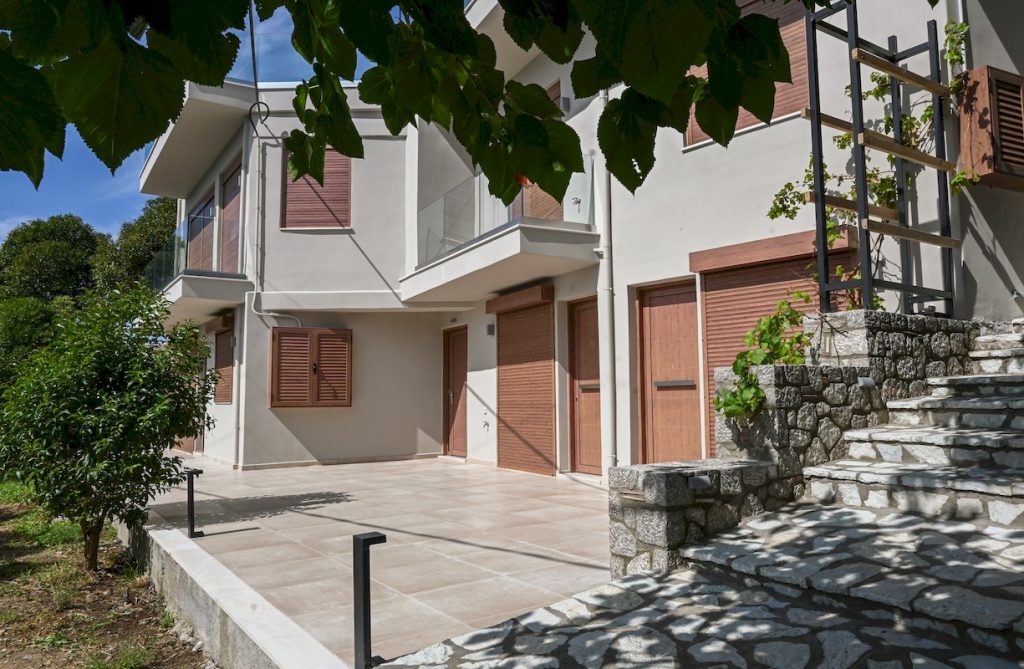
Stay at Komody Apartments in Delphi and immerse yourself in this mythological landscape. Explore our apartments, plan your visit with our travel blog, and book your stay at the centre of the ancient world. Families can use our Delphi with kids guide to make the myths come alive for younger visitors.
Plan Your Stay in Delphi
8 unique apartments, each with mountain or sea views, free breakfast, and fully equipped kitchens.
Related Posts