The Pythian Games: Ancient Olympics at Delphi You Never Heard Of
Everyone has heard of the ancient Olympics, but far fewer know about the Pythian Games, the second most prestigious athletic and artistic festival in the ancient Greek world. Held every four years at Delphi in honour of Apollo, the Pythian Games were unique among the great Panhellenic festivals because they celebrated both body and mind: athletic competitions alongside musical and dramatic contests. Walking through the theatre and stadium at Delphi, you stand where these extraordinary events took place for over a millennium.
For the mythology behind the games, see our article on the Oracle of Delphi. For planning your visit, start with things to do in Delphi.
Origins and History
According to tradition, the Pythian Games began in 582 BC as an expansion of an older musical festival celebrating Apollo’s slaying of the Python serpent. They were part of the Periodos, the circuit of four great games that also included the Olympics (Olympia), the Nemean Games (Nemea), and the Isthmian Games (Corinth). An athlete who won all four was called a Periodonikes, the ancient equivalent of a Grand Slam champion.
The games were held in the third year of each Olympiad, typically in late summer. They continued until the 4th century AD, when the Roman Emperor Theodosius banned pagan festivals. Over their thousand-year history, they attracted competitors and spectators from across the Mediterranean world, from Sicily to the Black Sea, from Egypt to Gaul.
Musical Contests
What set the Pythian Games apart from all others was their emphasis on music and poetry, reflecting Apollo’s role as god of the arts. The original festival was purely musical, and even after athletic events were added, the artistic competitions retained their primacy.
Events included singing to the accompaniment of the kithara (a type of lyre), solo kithara playing, and aulos (double flute) performance. Later additions included tragic and comic acting, painting, and poetry recitation. These contests were held in the Theatre, which still stands with its 35 rows of stone seats capable of holding 5,000 spectators. The acoustics remain remarkable: a whisper from the orchestra can be heard in the top row.
Athletic Events
The athletic programme mirrored the Olympics and included the stadion (a sprint of about 178 metres, the length of the stadium), the diaulos (double sprint), the dolichos (long-distance race of about 4.6 km), wrestling, boxing, the pankration (a brutal combination of wrestling and boxing), the pentathlon (discus, javelin, long jump, stadion, and wrestling), and chariot and horse racing.
The chariot race was the most prestigious event, associated with aristocratic wealth and power. It was a chariot race victory that commissioned the famous Charioteer bronze, now the star exhibit of the Delphi Archaeological Museum. This statue, dating to 478 or 474 BC, was part of a larger group that included the chariot, horses, and a groom, dedicated by Polyzalos, tyrant of Gela in Sicily.
The Prize
Unlike the Olympics, where winners received olive wreaths, Pythian victors were crowned with laurel (bay) wreaths. The laurel was sacred to Apollo: according to myth, the nymph Daphne was transformed into a laurel tree to escape the god’s pursuit, and Apollo adopted the tree as his symbol. The wreaths were cut from a sacred laurel tree in the Vale of Tempe, and a young boy from Delphi whose parents were both living was sent to cut the branches in a ritual journey.
The wreath itself had no material value, but the prestige of a Pythian victory was immense. Victors were celebrated in their home cities with triumphal processions, free meals for life, front-row seats at events, and commissions for victory odes from poets like Pindar, whose Pythian Odes remain among the masterpieces of Greek literature.
What You Can See Today
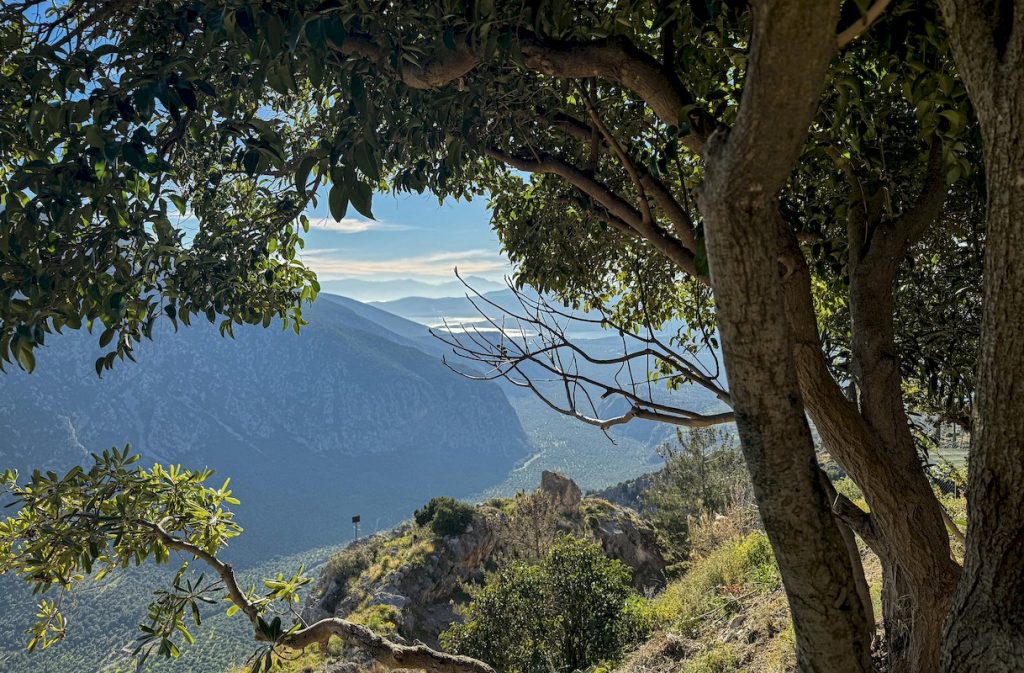
The Theatre: Built in the 4th century BC and later expanded by the Romans, the theatre is one of the best-preserved in Greece. Its position above the Temple of Apollo provides a stunning backdrop of the valley and Gulf. This is where the musical contests took place, and standing here you can imagine the audience watching performances that combined competition with worship.
The Stadium: Located at the highest point of the archaeological site, the stadium retains its stone starting blocks (with grooves for runners’ toes), tiered seating for 6,500 spectators, and a length of 177.5 metres. The walk up from the Theatre is steep but rewarding, and the stadium’s mountain setting is one of the most atmospheric spots in all of Delphi.
The Charioteer: In the Delphi Archaeological Museum, this bronze masterpiece is the most tangible connection to the Pythian Games. The figure’s serene expression, detailed eyelashes, and flowing robe make it one of the greatest surviving works of ancient art.
For more on visiting these sites, read our complete Delphi guide and the Oracle history article.
The Legacy
The Pythian Games contributed to ideas that endure today: the notion that artistic and athletic achievement are equally worthy of celebration, that competition can unite rather than divide, and that excellence deserves recognition regardless of origin. The modern Olympic revival in 1896 drew inspiration from all the ancient games, not just those at Olympia, and the Pythian combination of sport and culture lives on in the Olympic arts programme and cultural festivals.
Experience the Pythian Spirit
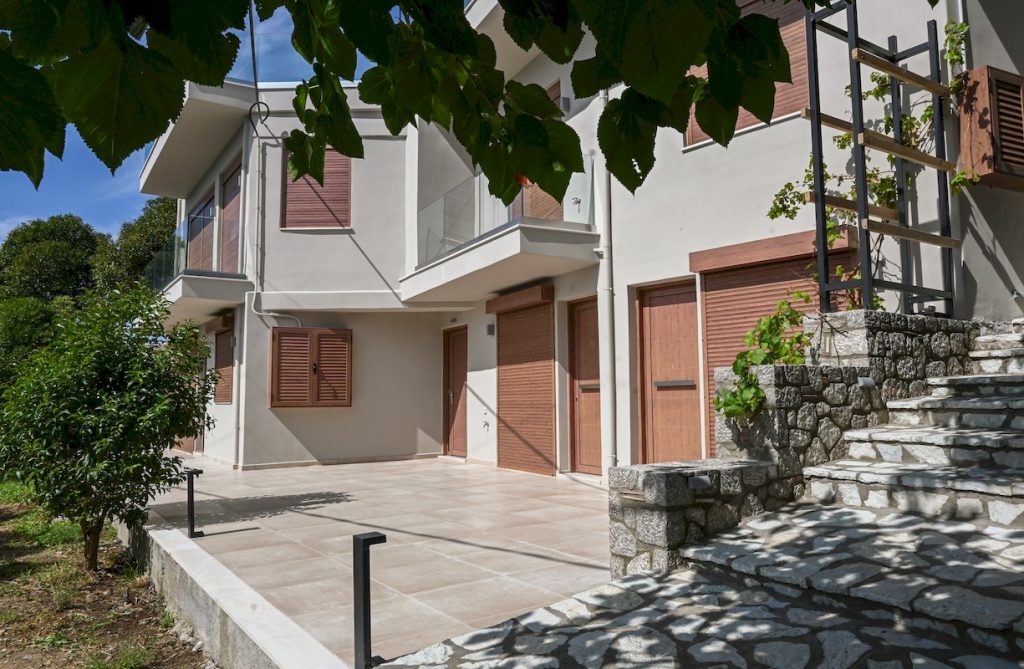
Visit Delphi and walk where ancient champions competed. Stay at Komody Apartments in central Delphi, minutes from the Theatre and Stadium. Our apartments offer comfort and convenience, with complimentary breakfast and fully equipped kitchens. The Comfort Triple Room and Two-Bedroom Apartment are excellent for groups of friends travelling together. Check our photos and book your stay.
For more Delphi stories, visit our travel blog and family guide.
Plan Your Stay in Delphi
8 unique apartments, each with mountain or sea views, free breakfast, and fully equipped kitchens.
Related Posts